 BI NIU
Size changes more than the label
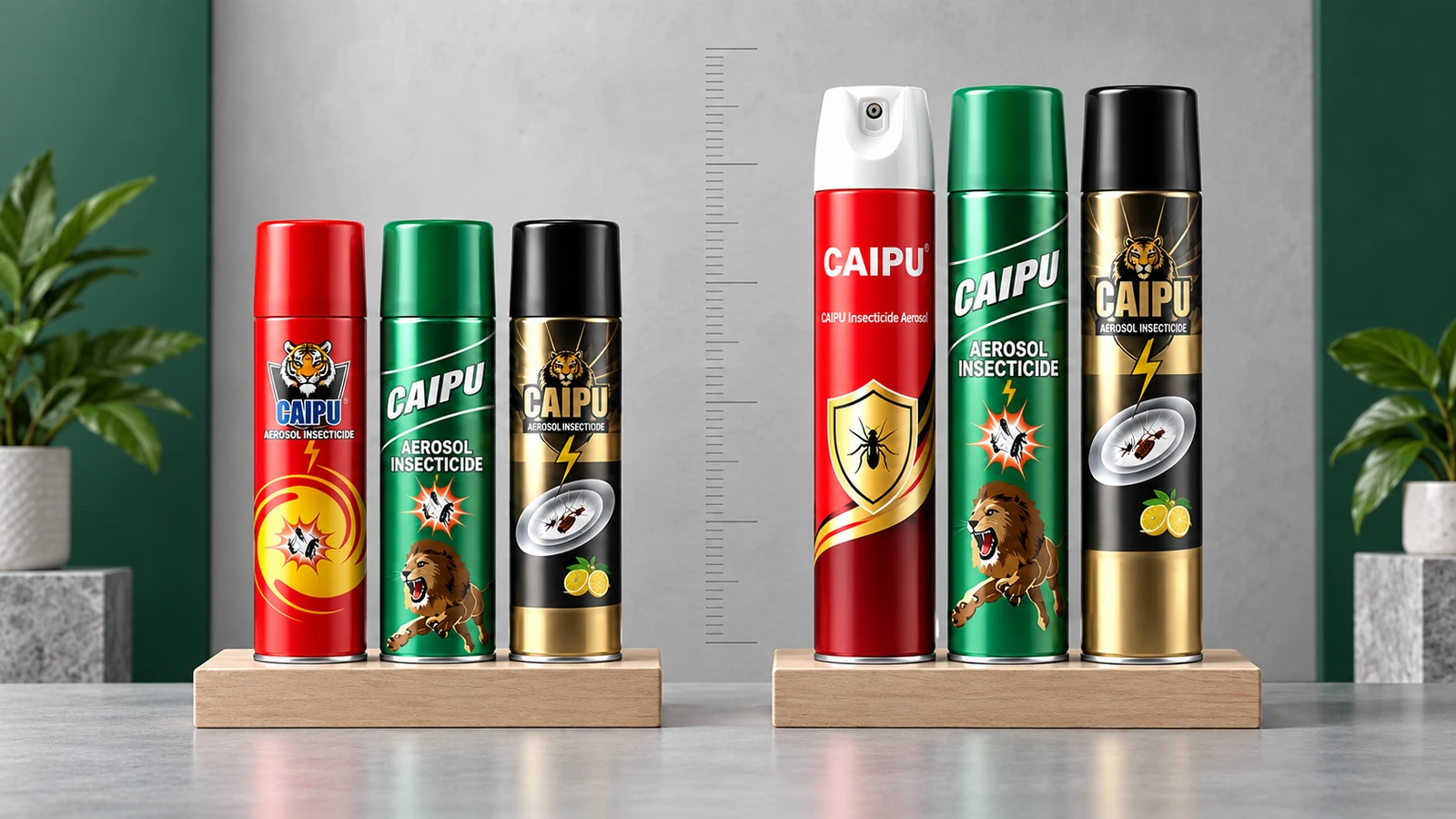
A 400 ml and a 600 ml aerosol are different commercial offers. The larger can may communicate value and longer household use, while the smaller can may reach a lower retail price and be easier to trial. The correct comparison includes formula, valve, can specification, carton and destination requirements.
Advantages of 400 ml
The 400 ml format can suit price-sensitive channels, smaller households and retailers that favor faster-moving price points. It may also allow more units per carton, although actual container efficiency depends on can and carton dimensions.
Advantages of 600 ml
A 600 ml can can support value-per-milliliter positioning and households that use aerosols frequently. It requires a retail price the market can absorb and a clear reason for the larger format. Higher unit value also makes packaging quality and spray performance especially visible.
Technical points buyers must confirm
Review the permitted formula, net content, propellant system, valve and actuator, can pressure requirements, corrosion protection, label wording and transport classification. Aerosols may be subject to dangerous-goods transport rules; coordinate early with the supplier and freight forwarder.
- Destination registration requirements
- Can and valve specification
- Spray pattern and discharge rate
- Carton and pallet rules
- Dangerous-goods documentation
How to decide
Compare competing shelf sizes, target retail price, consumer usage and distributor margin. Sampling should include spray operation, fragrance, leakage checks and packaging review. BI NIU can quote both formats against one consistent brief for a fair comparison.
Product registration, permitted ingredients, labeling and import requirements vary by market. Confirm destination-country requirements with the relevant authority or qualified adviser before ordering.