 BI NIU
Build the range around one clear customer
A strong private-label range starts with a defined buyer and sales channel. Decide whether you are serving value-focused households, supermarkets, wholesalers, hotels or professional distributors. This decision guides product sizes, pack counts, design language and the number of initial SKUs.
Launching too many unrelated products can divide the first order across small quantities and increase packaging complexity. Many distributors begin with one anchor category, such as mosquito coils, and add aerosols, incense sticks or accessories after the packaging system is established.
Create a practical product brief
A useful brief states the destination market, target customer, reference products, desired price position and expected volume. It also separates mandatory requirements from preferences. This gives the factory room to recommend available formats without losing the commercial objective.
- Product category and pack size
- Target ingredient or formula requirements
- Brand and language requirements
- Required documents and testing
- Estimated order and repeat frequency
Sampling and evaluation
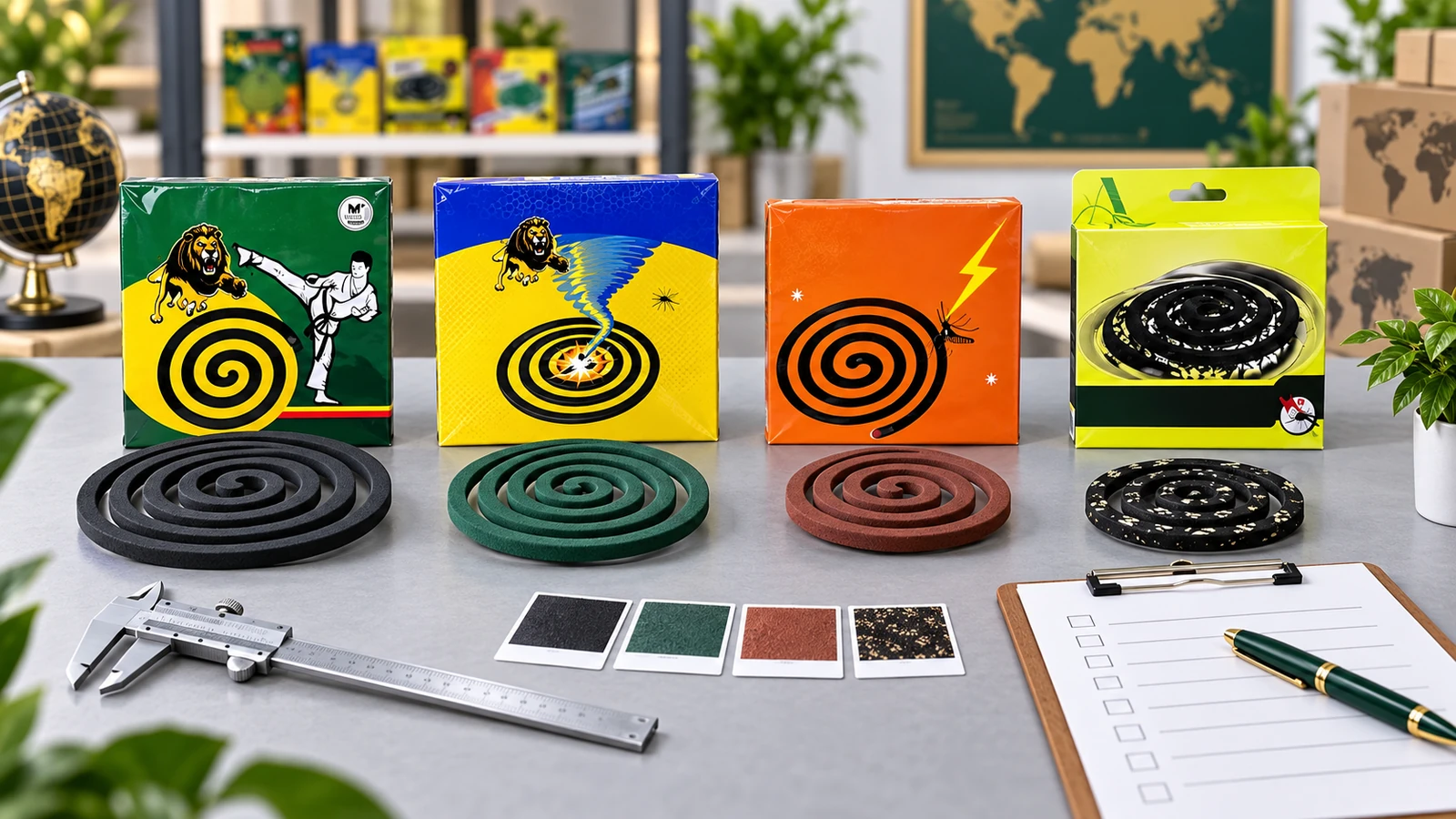
Use samples to verify physical appearance, fragrance, operation, packaging fit and presentation. Create a simple approval sheet and note the sample date or code. Feedback such as 'make it better' is difficult to action; specify which attribute should change and what reference should be followed.
Artwork and pre-production confirmation
Packaging must work as both a sales tool and a technical document. Confirm the dieline, barcode, company information, country-specific wording and carton marks. Keep one final approved PDF and editable source package. A pre-production checklist should connect the approved artwork to the approved product specification.
Production, quality review and loading
During production, the manufacturer should monitor agreed product and packing points. Before shipment, buyers may request photos, inspection reports or third-party inspection depending on risk and contract terms. Loading records help confirm carton quantities and container condition.
Plan the second order before the first ships
Record actual lead time, carton volume, loading quantity and any changes made during approval. These details support inventory planning and make repeat purchasing more predictable. The goal of private label is not one attractive shipment; it is a repeatable supply system.
Product registration, permitted ingredients, labeling and import requirements vary by market. Confirm destination-country requirements with the relevant authority or qualified adviser before ordering.